ERP for trading companies and wholesalers: control over purchasing, prices and margins
For wholesalers and importers: Odoo as ERP for trading companies, with Purchase, Sales, Inventory and Accounting in one system, customer-specific pricing and orders from every sales channel.

ERP software for trading companies: how Odoo helps
Margins are under pressure, purchase prices fluctuate and customers order through more and more channels. Odoo lets purchasing, sales, inventory and accounting work with the same product and price data, so you see per order what you earn.
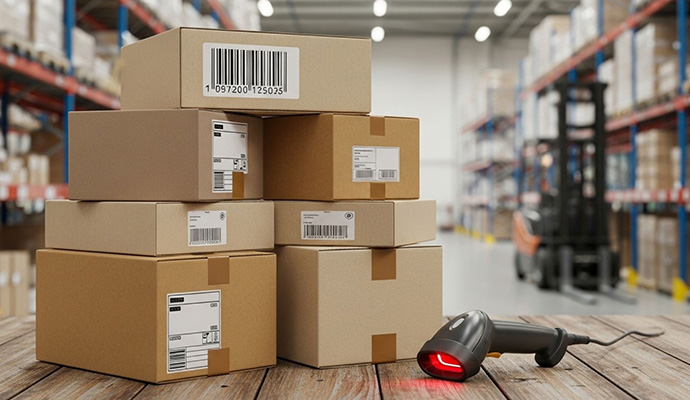
Automatic purchase proposals
Odoo creates purchase proposals based on minimum and maximum stock, expected demand and lead time per supplier. For each supplier you record purchase prices, price breaks and minimum order quantities, so the proposal uses the right price.
Price agreements and margin per customer
Price lists per customer, customer group or country, with price breaks, discounts and temporary promotions, are applied automatically in quotes and orders. Odoo shows the margin per order line, so sales staff see when a discount goes too far.

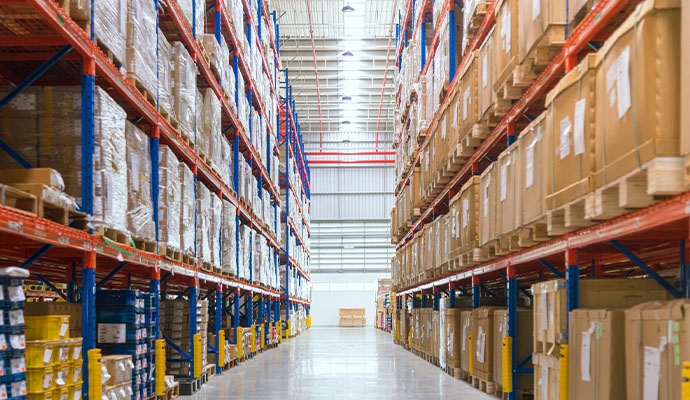
All sales channels in one order overview
Field sales order in a portal, retail chains via EDI and business customers in the B2B webshop at their own prices. We align order checks, stock reservations and invoicing with your sales agreements so the sales office and finance work with the same order data.
Why do trading companies choose Odoo ERP?
Delivery dates in quotes
Sales staff see the expected availability per product in the quote and promise a realistic delivery date.
Purchase prices and price breaks per supplier
Supplier prices, minimum quantities and lead times count in every purchase proposal.
Margin per order and customer
Gross profit per product, customer and order, visible directly in quotes and reports.
Drop-shipping
Let the supplier deliver directly to your customer; Odoo creates the purchase and sales side in one go.
Import and multiple currencies
Purchase in foreign currencies at current exchange rates, with landed costs such as freight and import duties in the cost price.
Lot and serial numbers for warranty
For technical products and parts: per serial number you see when and to whom it was delivered, useful for warranty and returns.
Invoicing and finance connected
We configure invoicing on ordered or delivered quantities, align vendor-bill checks with receipts and connect bank transactions to your accounts.
Multiple companies and countries
Several branches, companies and languages in one database, with intercompany orders between your own companies.
Implementation considerations
Complex price structures, such as project pricing with recalculation or supplier bonus schemes, usually require custom development. Do you run your own distribution centre with a lot of order picking? See ERP for distribution companies.
Odoo implementation for trading companies: how we work
We start every Odoo implementation with a Blueprint of purchasing flows, price agreements, sales channels and finance. This way we configure Odoo around your trading model, not the other way around. Where needed we build Odoo custom development, for example for complex price structures, or connect EDI and field sales.
1. We map your processes
We review your assortment, suppliers, price agreements and the channels through which customers order.
2. We design the setup
We translate price lists, purchasing rules and order types into Odoo settings and integrations.
3. We configure and test
We test with real price agreements: a price-break order, a purchase proposal, a drop-shipment and the invoice.
4. We support and improve
After go-live we look at margin per customer and stock turnover and fine-tune purchasing rules.
Integrations for trading companies
We connect field sales apps, company data, payments and scanners directly to Odoo; retail orders come in via EDI.




Explore other sectors
Frequently asked questions about Odoo for trading companies
ERP (Enterprise Resource Planning) for trading companies is software that brings the core processes of purchasing, inventory, sales and finance together in one system. Everyone works with the same item, price and order data.
Trading is about speed, margins and accuracy. Without up-to-date insight you get stock shortages, overstock, incorrect price calculations and missed margin. An ERP prevents fragmented data between purchasing, sales and finance.
Odoo combines purchasing, sales, inventory and accounting in one platform. It supports price agreements per customer, several suppliers per item, foreign currencies and international trade, and you only add the apps you need.
That depends on the complexity of your price agreements and integrations. Odoo covers most trading processes as standard; where it does not fit, we build Odoo custom modules.
Usually Purchase, Sales, Inventory and Accounting, supplemented with CRM, eCommerce for B2B customers and EDI. In a Blueprint we decide what you really need.
Yes. Price lists per customer or customer group with price breaks, discounts and validity dates are standard. Very specific pricing rules are built as custom development.
Per product you record several suppliers with their own price, lead time and minimum quantity. Odoo uses the preferred supplier in the purchase proposal; you can change it per order.
Yes. You can start with Purchase, Sales and Inventory and later add eCommerce, CRM or extra warehouses.