The development of ERP software never stands still, and Odoo has been proving for years that innovation and user-friendliness can go hand in hand. With the arrival of Odoo 20 – expected in September 2026 during the annual Odoo Experience event in Brussels – the market is once again eagerly looking forward to the next step.
But what makes this release so interesting? And more importantly: what does this concretely mean for your organization? In this blog, we will guide you through the key expectations, trends, and how to prepare for them effectively.
When is Odoo 20 coming out?
Odoo follows a fixed annual release cycle. For Odoo 20, this means that the launch is scheduled during Odoo Experience from September 24 to 26, 2026, in Brussels, after which the version is typically available at the end of September or in October.
The first stable version is usually expected in October or November. This predictability allows for strategic planning of upgrades, for example, around your fiscal year or other important business processes.
The biggest step: AI as a practical assistant
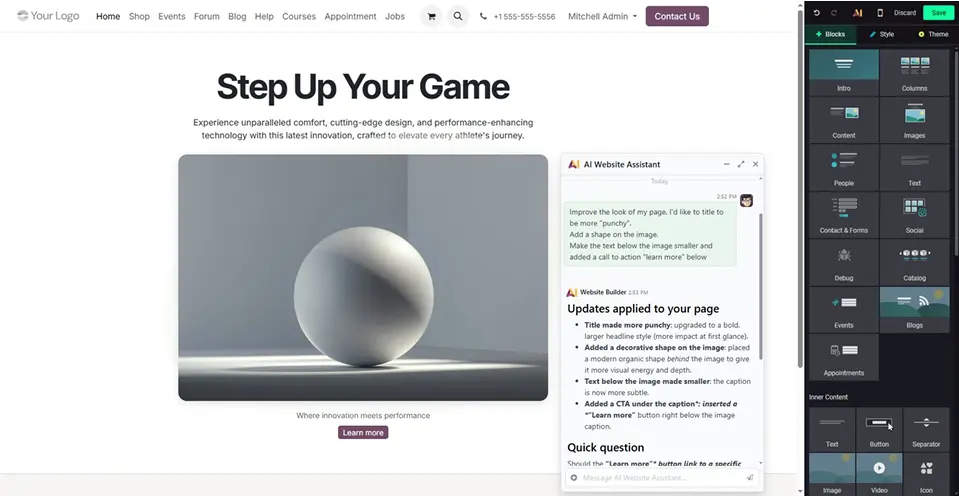
One of the clearest developments within Odoo 20 is the further integration of AI into various modules. Where automation previously focused mainly on fixed rules and workflows, we now see that AI is increasingly being used as support within daily processes.
Within the roadmap, AI applications are included in, among other things:
- Website management
- Accounting
- Helpdesk
- General create/update functions
This indicates that Odoo is further evolving towards a system that actively supports users in their work. Think of speeding up manual tasks, generating content, or supporting customer service processes.
The focus is not on complete automation without control, but rather on smarter support within existing workflows. The goal remains clear: to save time and reduce repetitive work.
Continuously improving performance and user experience
In addition to new features, Odoo continues to invest in performance and user-friendliness. Optimizations are included in several parts of the roadmap.
Examples of this are:
- Faster loading times within the website module
- More efficient memory usage in POS (less RAM usage)
- General improvements in user interface and interaction
These optimizations ensure that Odoo not only has more capabilities but also remains pleasant to use, even with intensive use.
Financial insight is becoming more practical and direct
There are also concrete improvements visible in accounting and finance. Odoo is taking steps to make financial processes simpler and more direct.
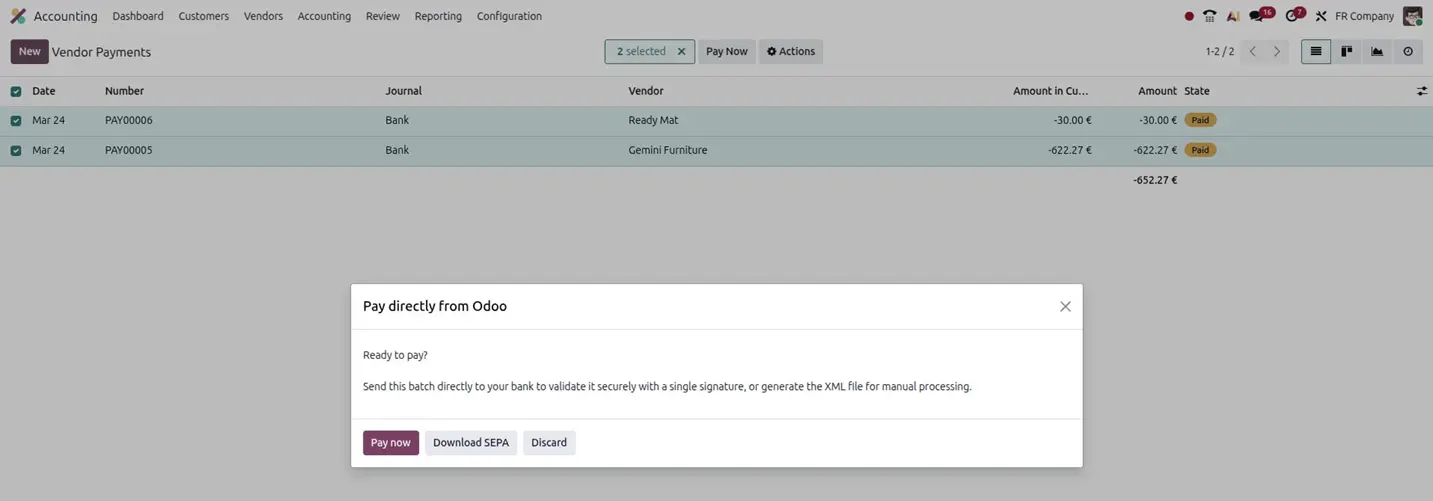
A notable addition is the ability to make payments directly from Odoo. This shortens the chain between administration and payment and reduces the number of manual steps.
In addition, there are improvements in:
- Reconciliation (more flexibility in which accounts can be linked)
- Structure and processing of financial data
- Support for various accounting scenarios
The line is clear: fewer isolated actions and more direct control within one system. For finance teams, this means working more efficiently and having better oversight.
Practical improvements in retail and operations
Within retail and operational processes, Odoo includes 20 different concrete improvements that have a direct impact on daily practice.
An example is the Point of Sale (POS), where among other things:
- Product combinations are automatically applied
- Hardware integrations are being made easier
- Improve overall performance and stability
In addition, we see developments in:
- Planning and field service (more integrated)
- Inventory management and logistics processes
- Order processing and sales flows
The common thread is clear: processes are becoming simpler, faster, and better aligned with each other.
Mobile working receives a renewed foundation
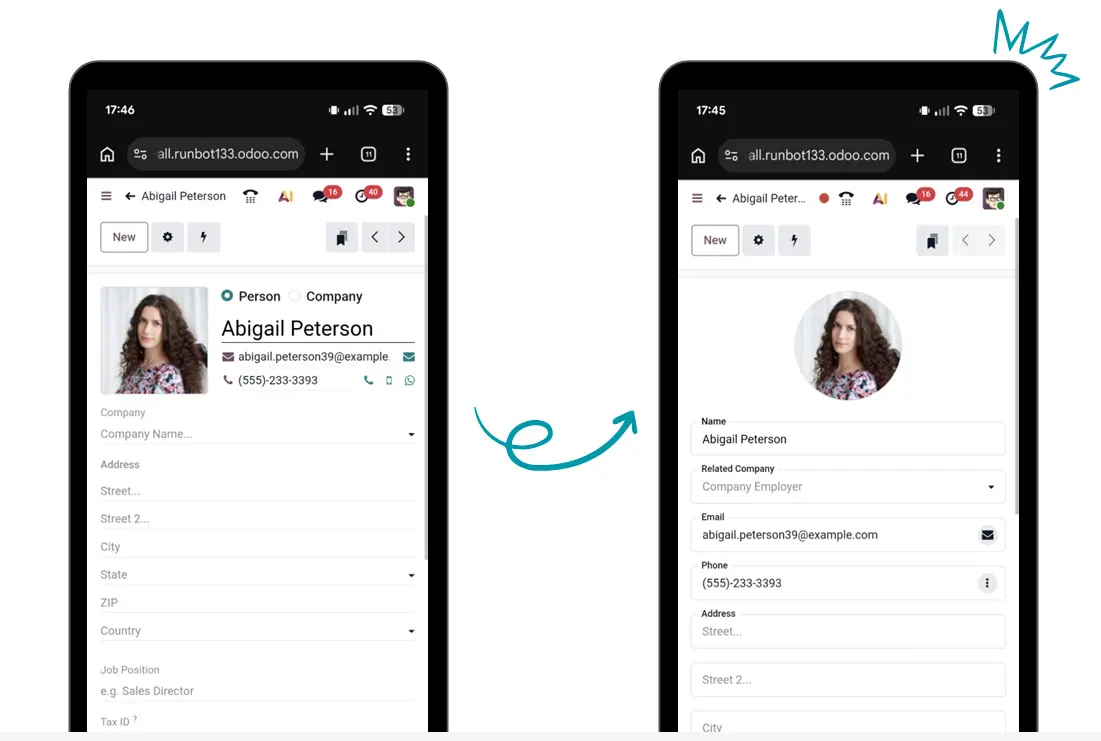
The mobile experience within Odoo receives a clear update in version 20. The roadmap mentions a new mobile interface.
Although details are limited, it is clear that Odoo is focusing on a better user experience on mobile devices. This aligns with a broader trend where employees are increasingly working on the go or outside the office.
For organizations with field service, service, or logistics processes, this is an important development. A better mobile interface means faster work, fewer errors, and more user-friendliness in practice.
Technical changes to consider
In addition to functional updates, Odoo 20 also includes important technical developments. For example, it works with:
- JSON-2 API as a modern successor to older API structures
- Owl 3 for the frontend, which ensures better performance and more modern interfaces
For organizations with custom solutions or external connections, these are important points of attention. These changes can impact integrations and may require adjustments during upgrades.
Focus on simplicity and efficiency
What stands out in the Odoo 20 roadmap is the consistent focus on simplicity. New features are not just aimed at "more," but especially at "better."
You can see that in:
- Simplified workflows
- Fewer manual steps
- Better integration between modules
- More support for users
Odoo continues to position itself as a platform where all business processes come together, with increasing focus on usability and efficiency.
Upgrading: how do you approach that smartly?
Upgrading has always been a priority at Odoo and is included by default in your Enterprise subscription. New versions bring better performance, new features, and a more modern user experience.
At the same time, we at Kilurion understand that a migration requires time and attention, especially with custom solutions or specific integrations. In practice, we therefore advise upgrading at most every two years to stay functional, avoid extra costs, and spread the impact of changes.
Should you switch to Odoo 20 immediately when it becomes available in September? Our advice is usually to wait for the first stable version (often around October/November). After that, you can carefully plan when an upgrade fits best within your organization. Especially when you work with a lot of customization, good preparation is essential for a smooth transition.
How do you prepare?
A successful upgrade starts well in advance:
- Map your current setup and customizations
- Analyze connections and dependencies
- Clean up old data and processes
- Align the timing with your business operations
At Kilurion, we guide this process from analysis to execution, ensuring that your upgrade goes smoothly and is well-controlled.
Conclusion
Odoo 20 clearly shows where ERP is headed: smarter, more proactive, and more user-friendly than ever. With AI as a key driving force, improved performance, and a strong focus on usability, this is expected to be one of the most impactful releases to date.
Whether you are already working with Odoo or considering a switch: this is the moment to look ahead. Do you want to know what Odoo 20 specifically means for your organization? We are happy to think along with you.